Our journey to Tadoba was part of a larger expedition encompassing both the serene landscapes of Kanha and the untamed wilderness of Tadoba. For Tadoba, the plan was to have four safaris, in the famed core zones. However, as fate would have it, all core zone slots were fully booked by the time we made our arrangements. With no other choice, we turned to the buffer zones—Sirkheda, Belara, Madnapur, and Nimdhela.
The entire plan was curated by one of my dearest friend – Soumyajit Sen , an avid wildlife lover who deeply adores and rhymes with the wild. With countless explorations and safaris under his belt across all the major tiger reserves of India, he was the inspiration and the obvious guide and mentor for us for this trip. Wishes to him for the countless ones to follow…!!!
Traditionally, buffer zones are seen as second-tier options when it comes to tiger sightings. But Tadoba offers a unique twist. Each buffer zone is thoughtfully designated with its own territories discounting the few overlaps, home to a known number of tigers, which improves the chances of sightings. Still, as with all things wild, nothing is ever guaranteed. In the jungle, you are at the helm of whims and fancy of the mighty big cat, whether they want to have a face-off with you or leave you waiting in awe of its elusive presence.
TATR (Tadoba Andhari Tiger reserve):
Tadoba National Park, Maharashtra’s oldest and largest national park, is part of India’s 47 Project Tiger reserves. Located in Chandrapur, about 150 km from Nagpur, it spans 1,727 sq. km, incorporating the Tadoba National Park (est. 1955) and Andhari Wildlife Sanctuary (amalgamated in 1995). The name ‘Tadoba’ honors a local deity, while ‘Andhari’ is derived from the river flowing through the region.
With an estimated 200 tigers, including cubs, Tadoba boasts a high tiger density, making sightings frequent.
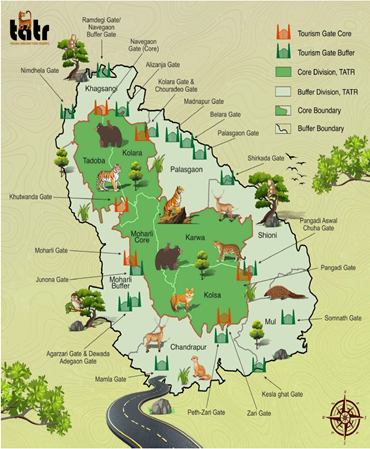
Though cubs remain unnamed until they reach sub-adulthood at three years, notable tigresses and their offspring are found across various zones. Tadoba has been and is home to many prominent and famous tigers like Matkasur, Maya, Chota Matka, Choti Tara, Gabbar and many more. A place cherished and revered amongst wildlife and tiger enthusiasts, TATR offers 6 core and 16 buffer gates to explore.
On the afternoon of 4th June, we arrived at Taaru Vann, our resort in Tadoba, a quaint haven tucked away in lush greenery, was our home for coming 3 days.
With the history of continuous past sightings in Tadoba, we were very hopeful on capturing the mighty big cats up close during our four safaris at Tadoba over the coming two days. Our schedule was:


5th June: Sirkheda Morning Safari
It is always advisable to have your own car or hire a cab for the entire leg of Tadoba trip. Since the gates are scattered over a much wider area and the number of gates is also very high, having a cab all along will definitely give more flexibility and ease.
On 5th June, at the earliest hour of dawn, 4:45 AM, we set off towards Shirkheda, our excitement dimmed slightly by the soft, persistent drizzle from the night before.
Rain in the jungle is a double-edged sword. While it paints the forest in vibrant greens, it’s less than ideal for wildlife sightings—especially when you’re chasing a glimpse of the elusive tiger. Typically, hot and dry conditions work in your favour. Tigers, like many in the animal kingdom, are most active during dawn and dusk, prowling for prey or making their way to waterholes. As the sun climbs and temperatures rise, the forest retreats into shade—and its creatures follow, leaving the trails quieter and the sightings rarer. With the rain offering easy water access within the dense undergrowth, the chances of tigers stepping out to larger water bodies becomes slim. The Shirkheda buffer is home to some of Tadoba’s most iconic tigers—the splendid Choti Rani and her cubs, along with the formidable Heena, Verappan, and Charger. Morning conversations with guides and gypsy drivers stirred some optimism; there had been consistent sightings of Choti Rani and her cubs in recent days, adding a hopeful buzz to our safari.
By 5:30 AM, we rolled into the forest. But as time went by and gypsy rumbled deeper into Shirkheda, that optimism began to wane. Having just come from Kanha, the contrast was stark. The forest here felt unusually subdued—wildlife sparse, and the landscape eerily quiet. It wasn’t just the absence of motion; it was the absence of cues. No alarm calls, no movement, no trail to follow.
Adding to the challenge was the fact that Tadoba buffer remains closed on Wednesdays, which interrupts the rangers’ tracking routine. This weekly pause disrupts the thread of tiger movements and patterns, creating a
kind of “reset” in the ecosystem’s rhythm. The natural clues that usually guide trackers and guides —pugmarks, calls, behaviour patterns— lose their edge, and Thursday’s safaris often begin with a blank slate.
Despite the determined efforts of our gypsy driver and guide, Shirkheda remained quiet. We combed the tracks with unwavering focus, scanning every shadow, listening for every whisper of movement. But the forest held its secrets close. There were no stripes to be seen. As the clock ticked past the final moments of our drive, we knew the outcome—a dry safari.
We returned to our resort with heavy hearts, somehow feeling defeated. After freshening up, we quickly finished our lunch and headed toward Belara for our second safari of the day.
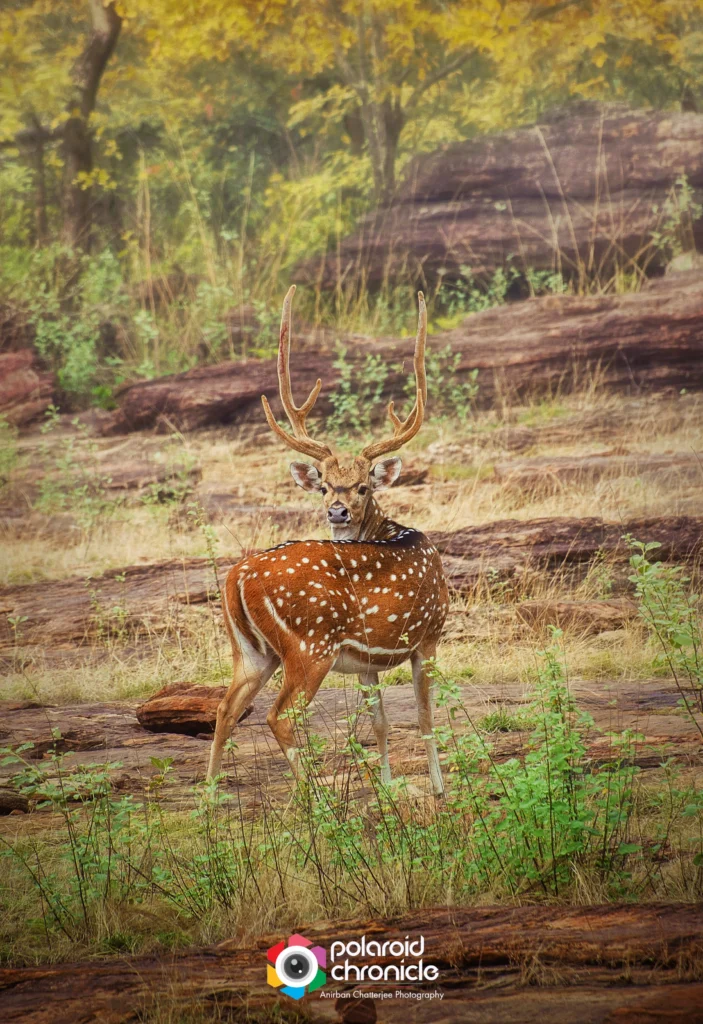
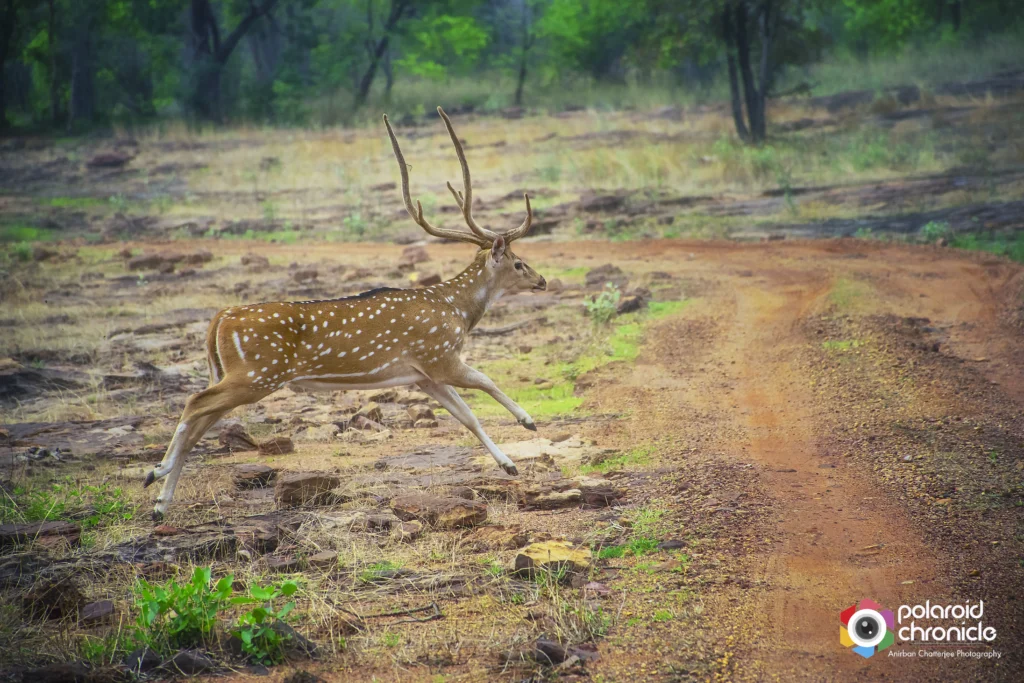

5th June: Belara Afternoon Safari
Afternoon safaris at Tadoba start from 3.30pm. After fishing off our lunch we started for Belara around 2.45pm. Despite of the heavy heat and scorching sunlight the skies greeted us once again with brisk showers, , as if echoing the morning’s mood.
Over time, I’ve come to recognize a quiet omen in the rain. There’s something about it that seems to shroud the jungle’s secrets even more. That was for sure, me and rains – we were not getting along. Even with the presence of additional lady-luck, our Guide madam, we couldn’t turn the tables. The forest remained elusive. The striped sovereigns chose not to make their presence known, and the safari drew to a close without even a whisper of movement in the undergrowth.
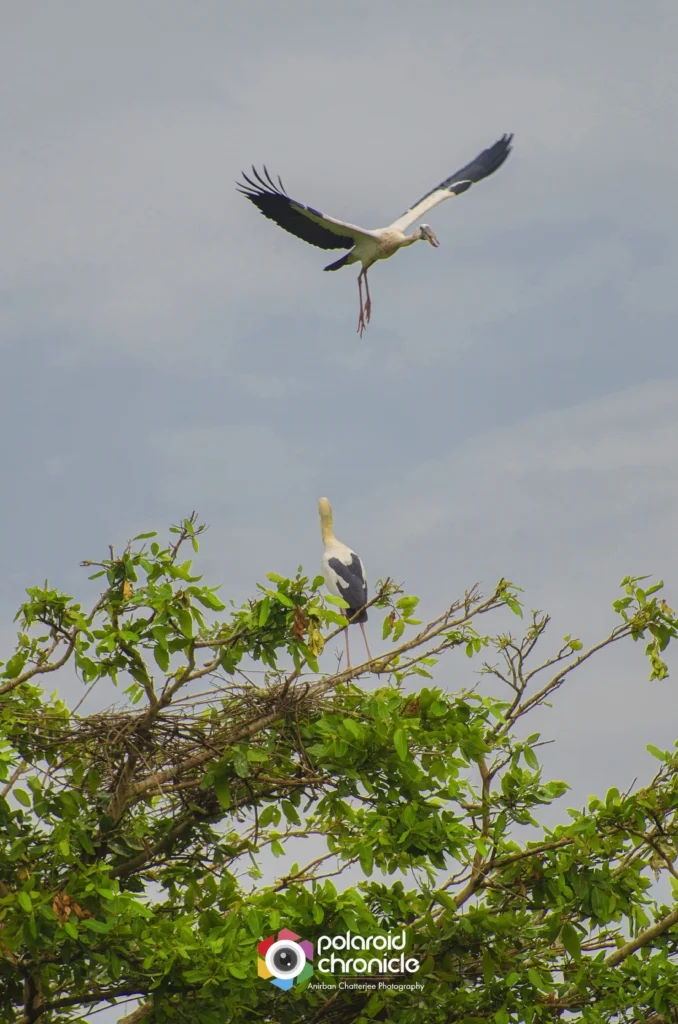
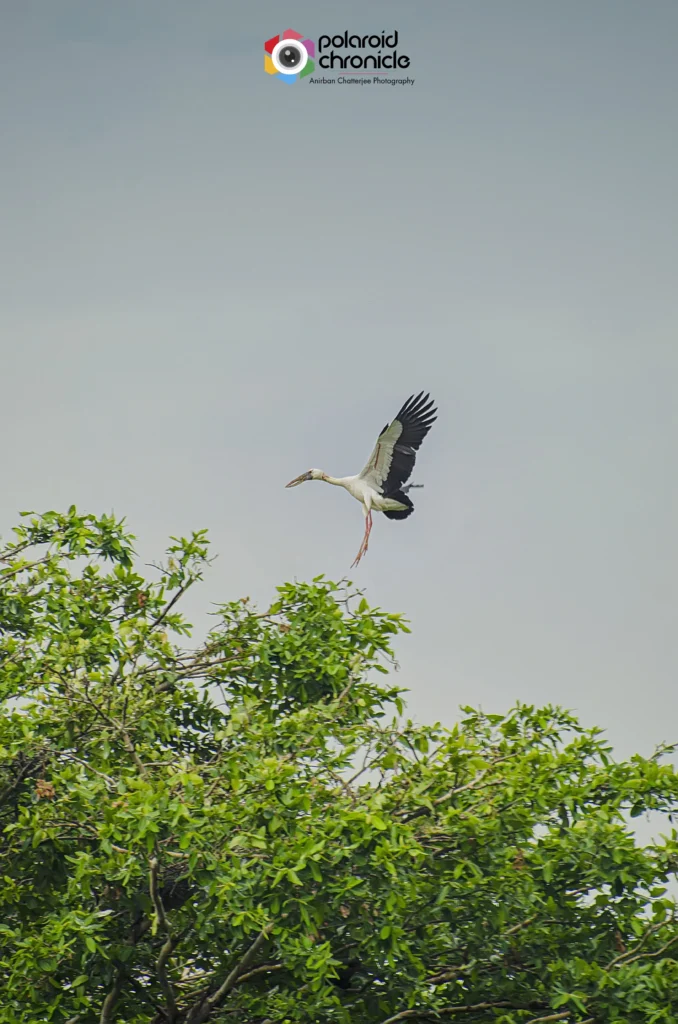

6th June: Madnapur Morning Safari
6th June began with quiet anticipation as we departed for Madnapur at our now-familiar hour of 5:30 AM. The air felt different—charged, perhaps, by the quiet confidence of our guide and gypsy driver, both convinced that luck was about to turn in our favour.
Sometimes all you have to do is just say it, say it loud – that’s exactly what our guide did. The moment we sat in the gypsy, he told out of blue – “Sir, camera ready rakhna….” (‘Sir, keep your camera ready…’). And right he was .
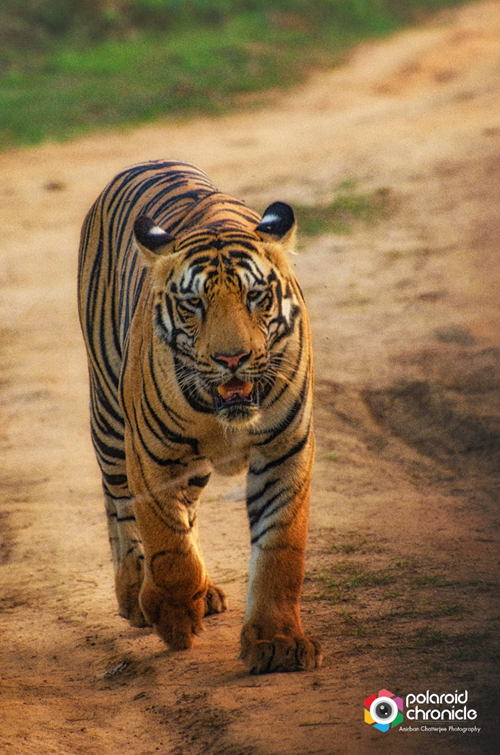
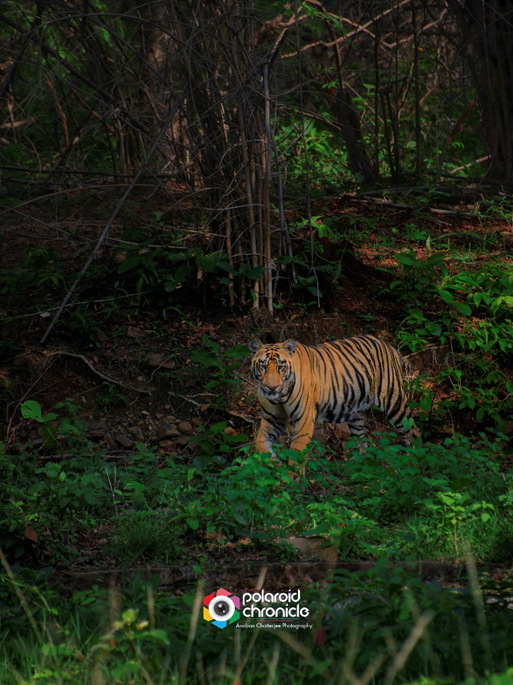
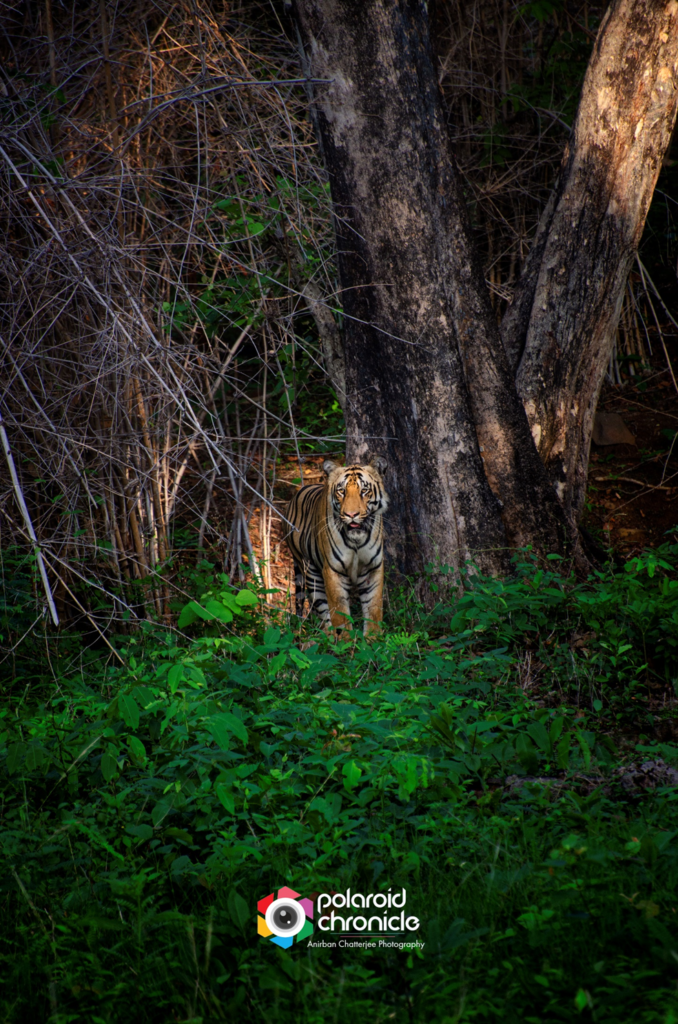
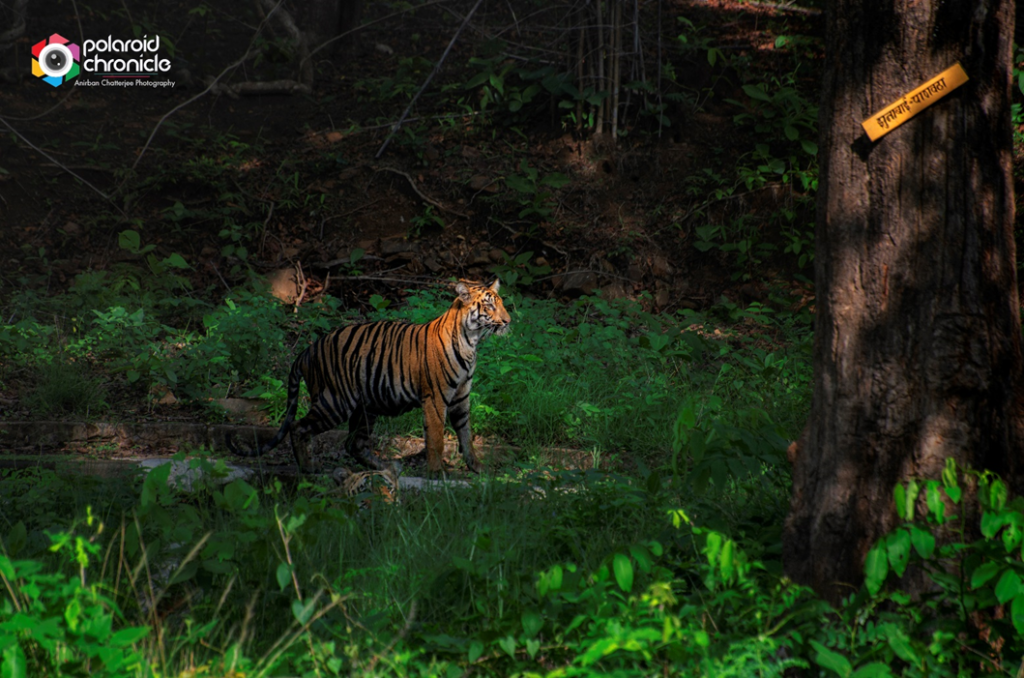
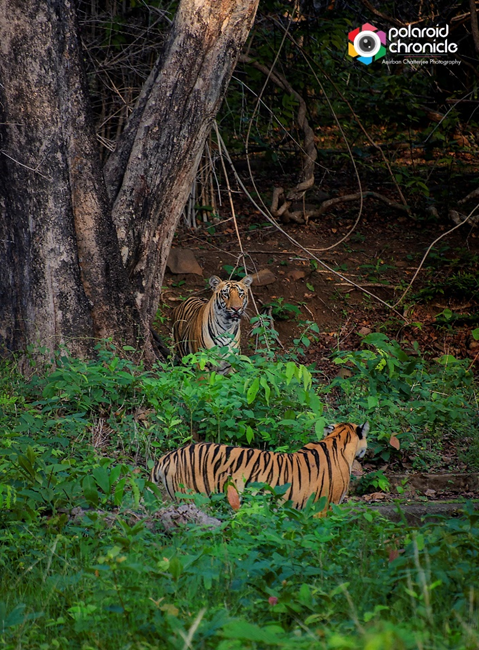
Barely five minutes into the forest, the stillness parted—and there he was. Veer, the mighty, yellow-striped beauty of Madnapur, emerged into view. Still not a full-grown adult, he was the embodiment of feline grace, composed striding down the path with an unhurried confidence. What followed was a mesmerizing 15-minute encounter, a spellbinding stretch of time. Unbothered by our presence, he walked directly toward us, unflinching, enjoying all the attention and spot light.
It was a sight that didn’t just satisfy a longing—it stirred something deeper. Awe. Reverence. The kind of moment that rewires your understanding of presence in the wild. Home to notable tigers like Junabai and her fairly grown-up cubs, Veer, Nayla, and the mighty Xylo, who commands three territories, Madnapur is rich with tiger royalty.
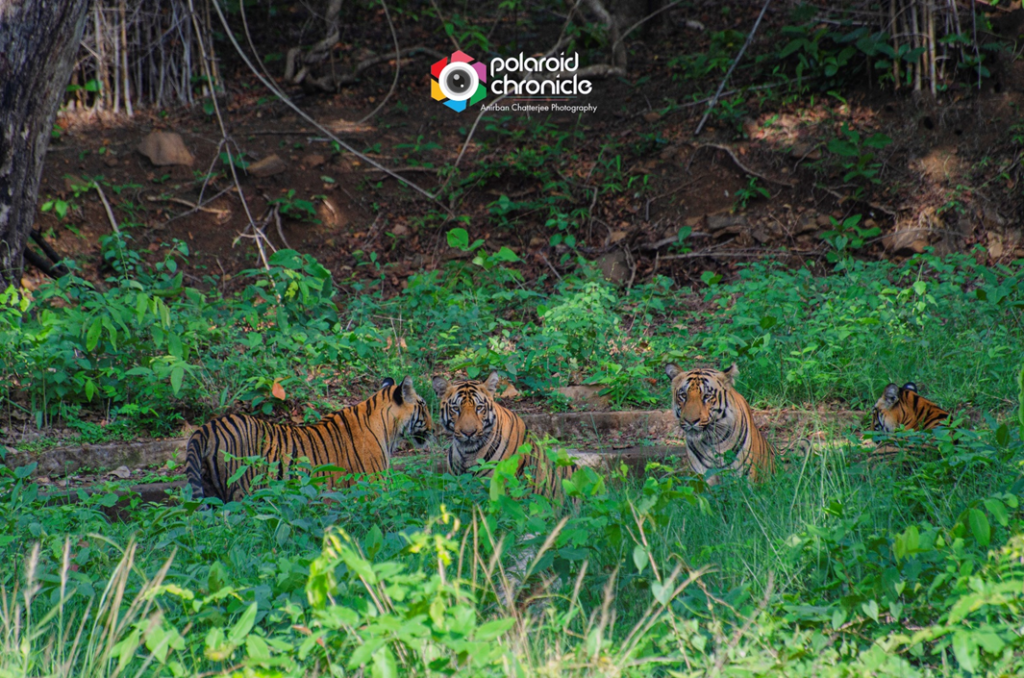
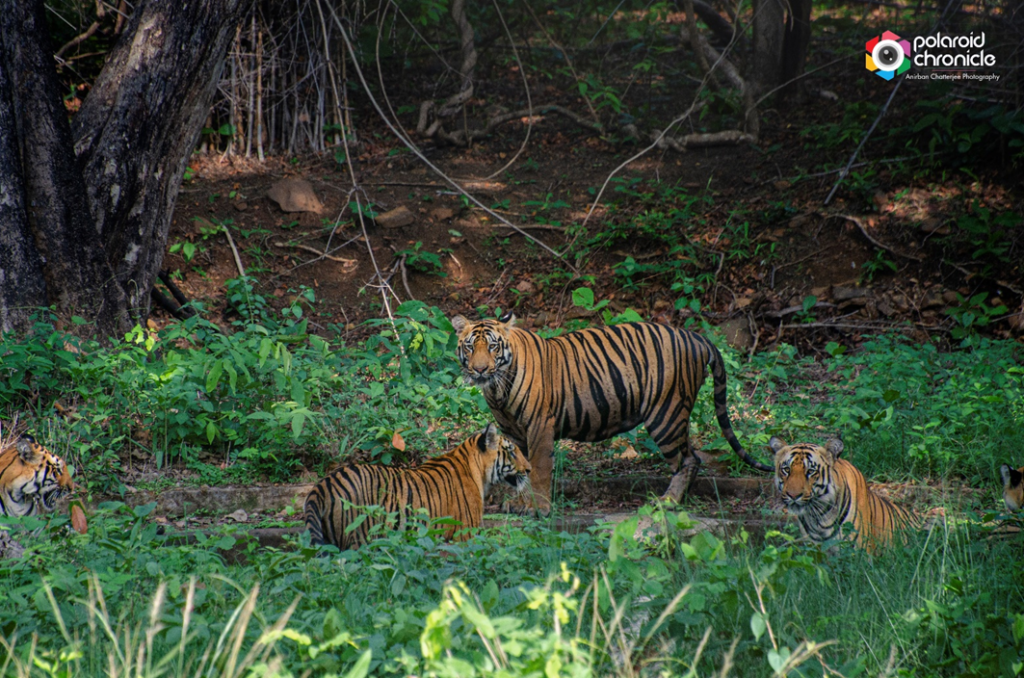
Just as we were still savouring the encounter with Veer, a sudden call stirred the air. We followed its lead, arriving at a waterfront, anticipation thick in the silence. And then, another sighting unveiled. Junabai emerged from the bushes and stepped into the water—serene, effortless. Moments later, one cub followed… then another… and then the third. It was cinematic, unfolding frame by frame in front of our eyes.
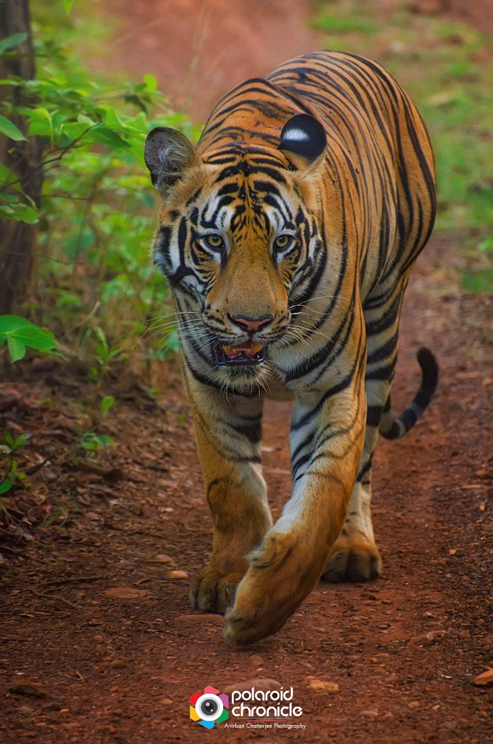
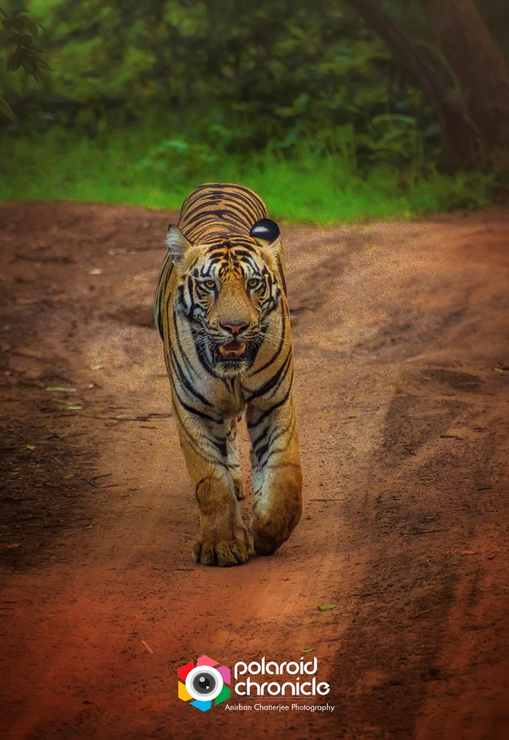
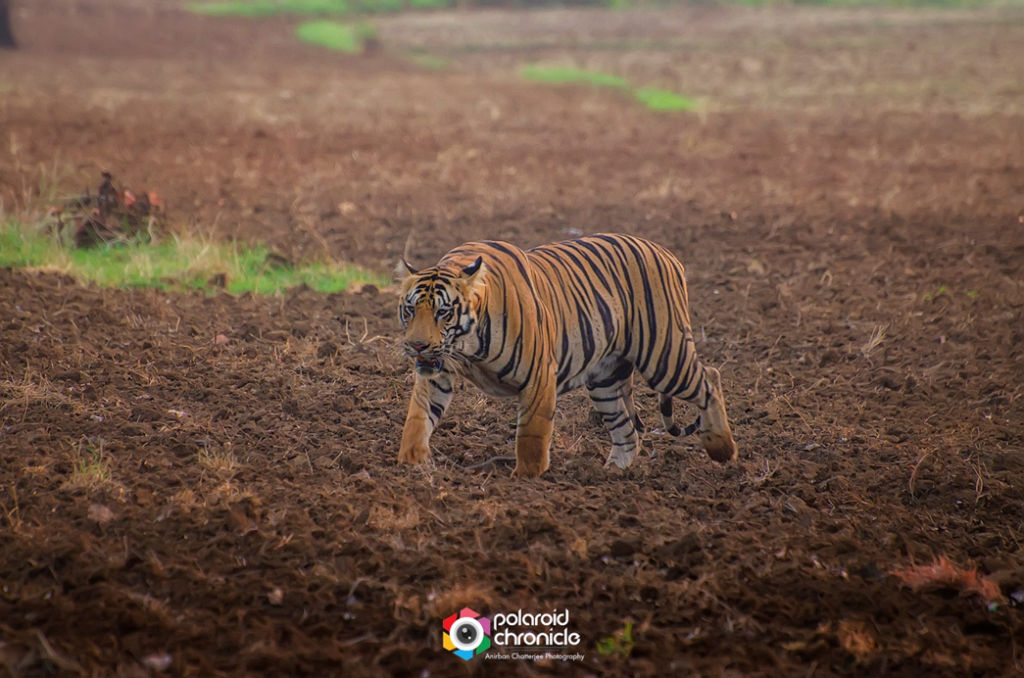
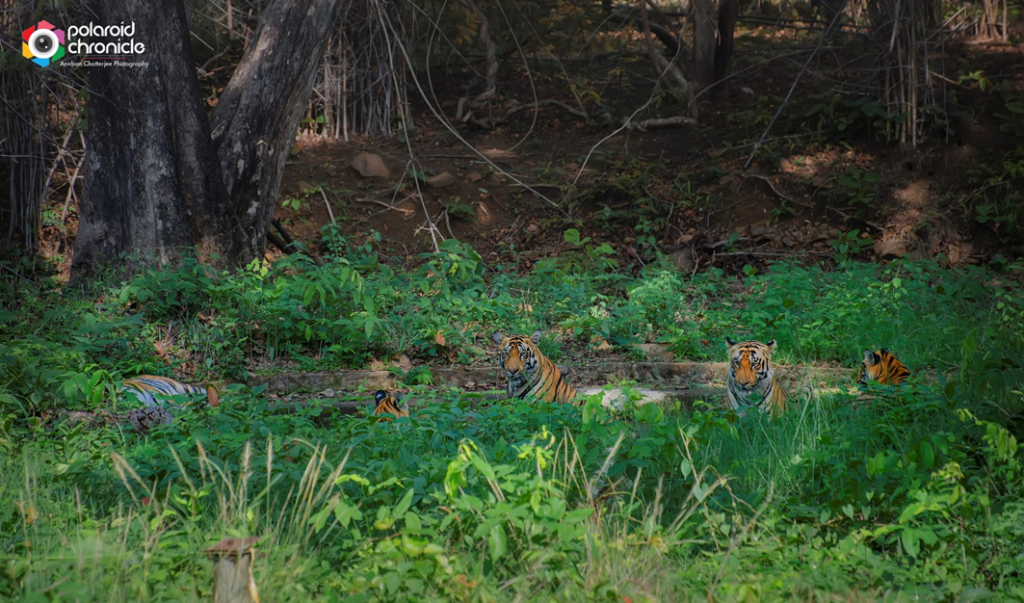
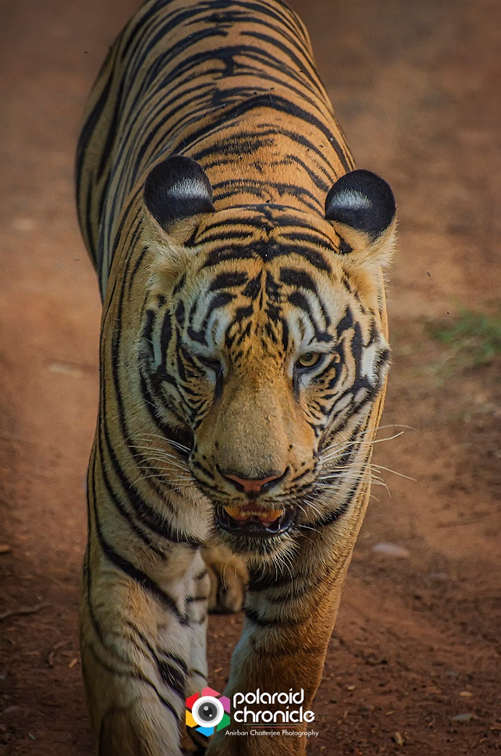
Just when we thought the scene had reached its climax, Nayla appeared, joining the family in the cooling waters. Four tigers, together in one water bed—a sight rare and breathtaking, leaving us utterly awestruck and speechless. Word travelled fast. Over the next 40-45 minutes, nearly 16-17 gypsies arrived, lining up by the waterbody, each occupant fixated on the unfolding spectacle. From little children wide-eyed in wonder to seasoned wildlife enthusiasts, the magic of the moment was undeniable—the avidness unwavering.
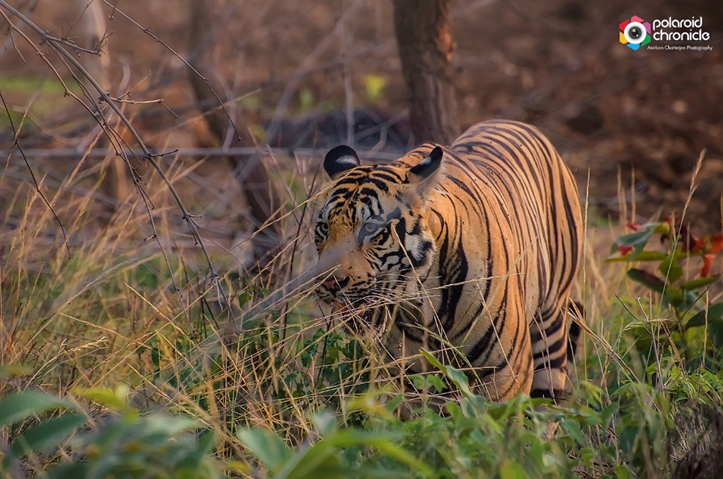
Just as we were settling into the rarity of the sight—a blue-moon event followed—Veer emerged out of nowhere, again. Like icing on an already exquisite cake, he strode into view, and joined the others in the waterbed.
Five tigers, together—playing, lazing, completely at ease in the waterbed. A sight so rare, so mesmerizing, it etched itself intoour hearts and minds forever.
The disappointments of the past vanished, dissolving into the sheer awe of the moment. We had come seeking glimpses. We left with a spectacle. More than we had imagined, more than we had dared to hope. Four hours slipped through time’s fingers, gone before we even realized. And then, it was time—time to bid adieu to these majestic beauties, knowing we had witnessed a piece of the jungle’s magic that few ever do.
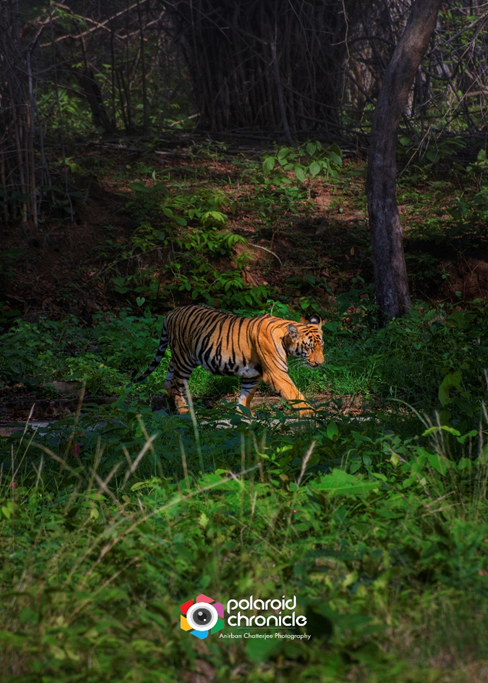
With hearts full and memories richer, we returned to our resort, cherishing the magic of Madnapur. Yet, the adventure wasn’t quite over—one last safari remained.

6th June: Nimdhela Evening Safari
As we packed our bags and bid farewell to the resort, we savoured a quiet lunch, still in process of absorbing what we witnessed in our morning safari. Madnapur has re-kindled something. With renewed energy, we set out for Nimdhela, our final destination. The drive was long 40 kilometers from our resort, nearly an hour on the road. But as the landscapes shifted and the jungle loomed ahead, excitement stirred once more. One last safari. One last chance for the wild to surprise us.
Nimdhela, revered for its frequent tiger sightings, holds a special place in Tadoba’s landscape. Among its inhabitants, Chota Matka, the undisputed King of Tadoba. Born to Matkasur and Choti Tara, he carries a lineage of strength, dominance, and unparalleled might. His reign has been shaped through fierce territorial battles, triumphing over and killing formidable rivals like Bajrang and Brahma, securing his status as Tadoba’s most sought-after tiger.
Yet, as we entered Nimdhela, disappointment loomed and we heard that Chota Matka was injured, his movement restricted under the watchful eyes of the forest department. His usual terrain was off-limits, closed for recovery, a blow to all those hoping to witness his legendary presence.
Midway through our Nimdhela safari, the air crackled with urgency—a tiger sighting had been reported. Everyone rushed to the location waiting for one look of the stripped one.
Then came the roar, deep and commanding, reverberating through the dense foliage beyond the bushes. Moments later, a piercing shriek shattered the stillness, and a flurry of wild boars bolted from the undergrowth, scattering in frantic retreat. And there she was—Babli, her yellow stripes flashing between the trees. She had just hunted a boar. Unbothered by our presence, she slipped further into the jungle, disappearing into the shadows to savour her meal. It was clear—she wouldn’t be stepping out for an audience soon enough. We waited, lingering in quiet hope, before finally moving on, somehow content in the knowledge that we had witnessed some streak of the raw and untamed essence of the wild.
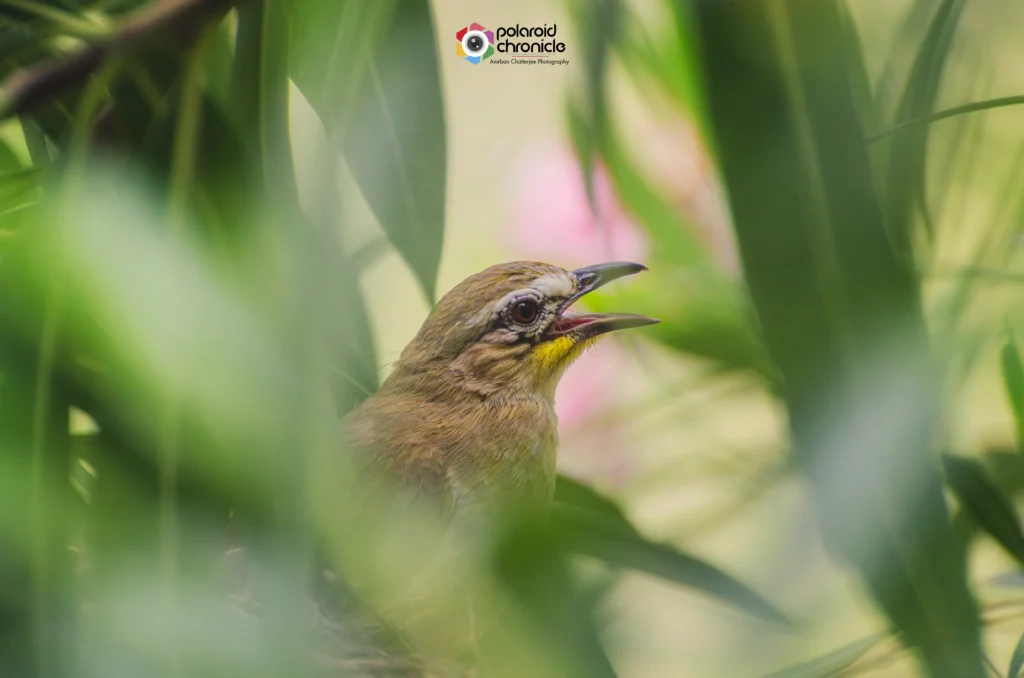
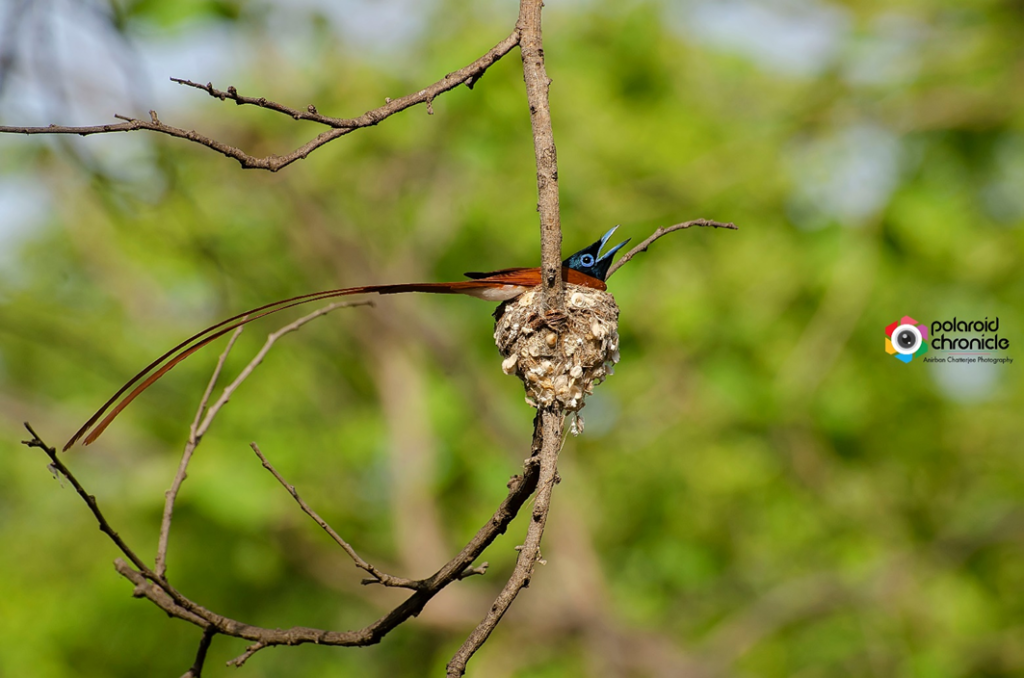
Despite the twists of luck on this journey, Tadoba had one final gift to offer—a treasure in feathers. After days of hoping, chasing, and searching, we finally captured the Indian paradise flycatcher, a vision of elegance perched gracefully in her nest. Without the advantage of a high-end zoom lens, landing this shot felt like an achievement in itself. She was a delicate, fleeting beauty etched into memory.
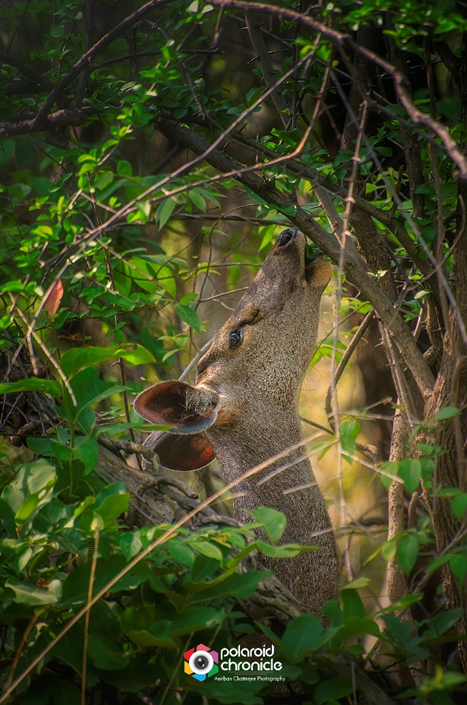
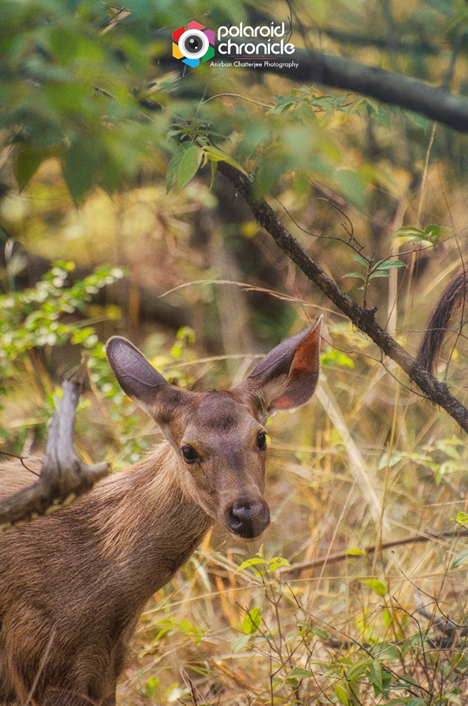
Just as we were preparing to leave the forest, the journey had one last surprise in store. Our guide suddenly halted the vehicle, sensing something in the air—the unmistakable scent of a kill. A hushed certainty settled over the group: a tiger had hunted nearby. Then, as if scripted by the jungle itself, Nayantara emerged out of no-where. Graceful, powerful, effortless, she strode into view, dragging a male deer by the throat, her sheer strength a breathtaking display of raw dominance. It was the first time we had witnessed a tiger carrying its kill—an image that would stay etched with us forever.
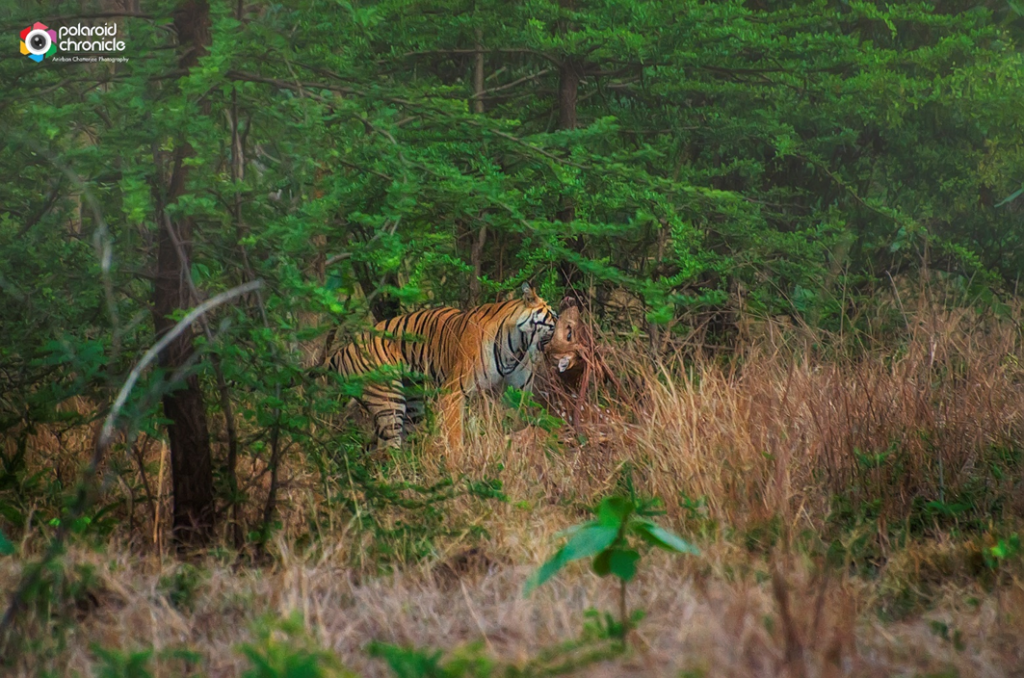
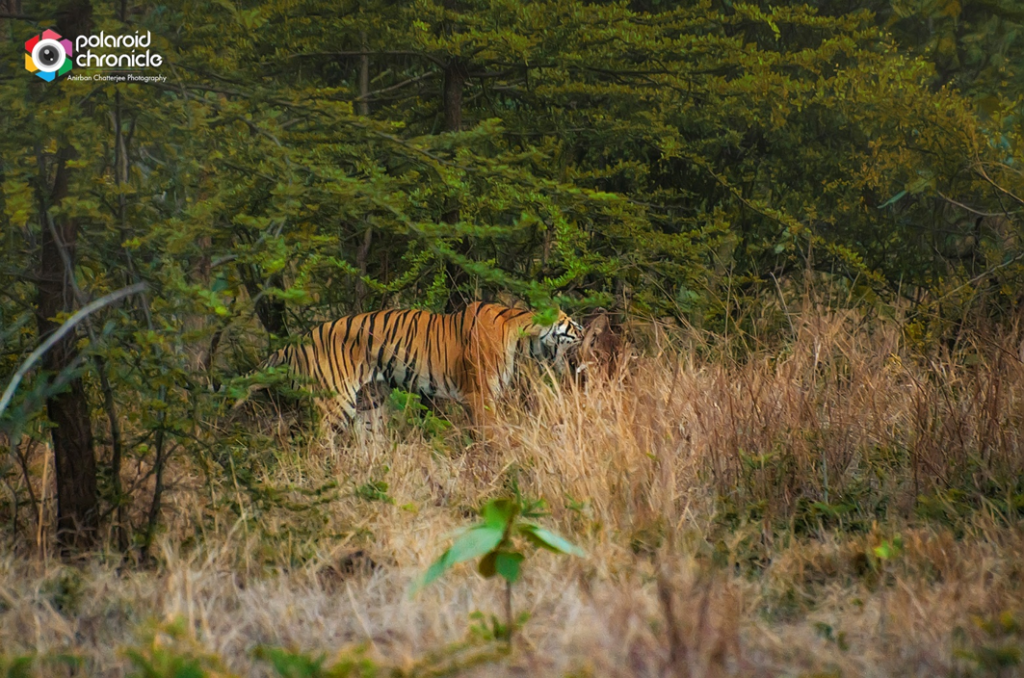
As we watched her disappear into the wilderness with her prize, it felt symbolic. A final farewell, a fitting ending to an unforgettable journey.
With hearts full yet heavy, we left, carrying not just memories but a silent promise—to return to this land of untamed beauty, where nature reigns supreme, and the wilderness always has a story to tell. Transformed, humbled, and filled with admiration, we set out for home, carrying with us not just memories but a quiet vow—to return, again and again, to the wilderness that had given us so much.
Being close to nature is a rare bliss, one that few truly experience. And yet, those who do know—it changes you, in ways both profound and unspoken.
One thing was certain for us; this was not an ending. Just the beginning of many, many more encounters to come.
“…… that a tiger is a large-hearted gentleman with boundless courage and that when he is exterminated – as exterminated he will be unless public opinion rallies to his support – India will be the poorer, having lost the finest of her fauna “ – The Jim Corbett Omnibus.